
The Argument You Are Having Every Morning
Nobody in the room fell into their uniform. That is the first thing worth naming, because the language around personal uniforms tends to describe them as accidents, defaults, the outfit you happen to reach for. Nothing in this room supports that reading. Every uniform here is a choice — often a very old one, often made under pressure, often made in response to a specific person or a specific version of the self, and almost always defended.
The uniforms fall into three loose families.
The first is the inherited uniform. Someone dresses now the way a mother did in 1974. Someone dresses now the way they dressed in graduate school and hasn't been in graduate school for fourteen years. A blue-button-down, khakis, sneakers, glasses combination named a "dad uniform" by friends, worn before fatherhood and defended as never having been about the child. These uniforms are worn in the present tense but the person being dressed is somewhere else. The most striking of these is the graduate-school Signal, which asks the room, in the last line, to tell the writer that they are wearing a costume. Nobody in the room takes that assignment. The costume protects them.
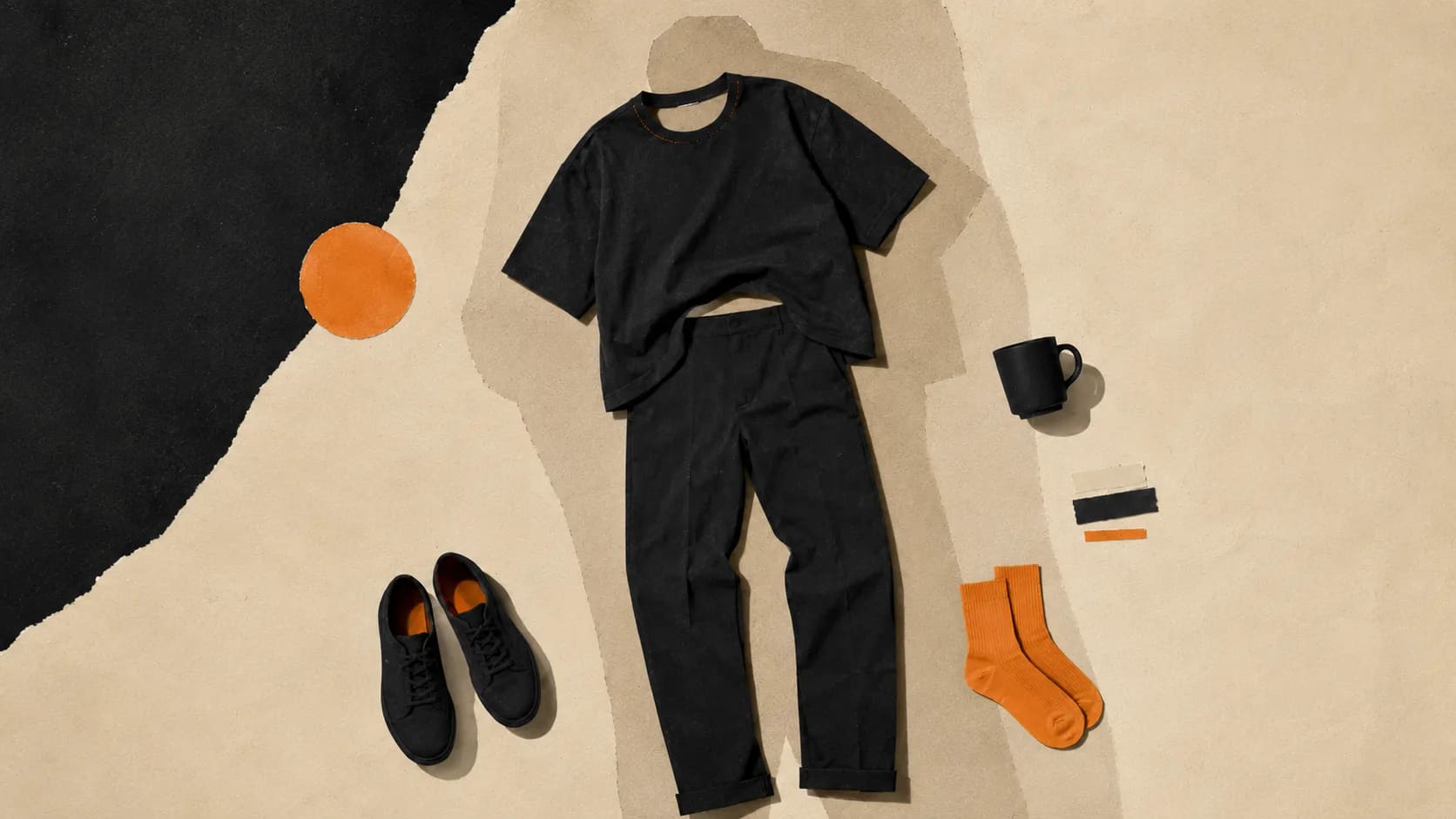
The second is the deliberate uniform. Wide-leg wool trousers, oversized shirt, loafers — described as looking intentional but actually being a panic-buy when a garment wears out. That is the room's dryest joke and also its most honest observation. Most of these Signals treat the uniform as a way of removing decisions, not as a fashion statement. "The moment I settled on my uniform I had more time. It is not deep. It is just fewer decisions before nine in the morning." A silk slip dress under a men's blazer is chosen, deliberately, even though the writer has "looked wrong" in it in every city they've lived in. The refusal to change is the uniform. Not the clothes.
The third is the negative uniform. "My uniform is not what I wear. It is what I refuse to wear." No logos. No white. Nothing tight at the collar. This is the room's cleverest reframe. It suggests that a personal uniform is not really a set of clothes at all. It is a set of exclusions. What looks like sameness on the outside is a large private space defined by a small perimeter of hard rules. The chaos, the writer notes, is invisible from outside because the rules are what the eye reads.
Underneath the three families runs a stronger and more difficult observation. Several of these uniforms began at a specific moment in the writer's life, and can be dated. "I've had the same uniform since I stopped drinking. Before that I dressed unpredictably. Sobriety came with a very specific pair of grey pants." That single Signal reframes half the others. A uniform is often the visible edge of an event the wearer wants to remember or an event the wearer does not want to repeat. The green hoodie replaced four times, each version slightly more expensive and never quite the same, is not a garment. It is a small monument being carried forward with adjustments. The overalls, drawn by the writer's daughter, are a portrait the family agrees to keep painting.
A minority pushes back on the whole exercise. One Signal insists on dressing differently every day, "not to be interesting" but to prevent anyone from assuming they know who the writer is. Another says the uniform question tricked them: they have seven uniforms, one for each context. Both are refusing the assumption baked into the room, that a person has one visual self. But the refusals themselves are patterns. Seven costumes is not the absence of a uniform; it is a wardrobe of them. Refusing to be legible is a legible position.
The only Signal that steps entirely outside the frame belongs to the writer who says, calmly, that the bag is the outfit. The clothes are "for legal reasons." That line is funny and correct at the same time. Some uniforms are protection against being seen at all. The specific garment is decoy. The signal to the outside world is elsewhere on the body.
The room's real finding is that a uniform is a long, quiet argument the wearer is having with someone. Sometimes the someone is a mother in a photograph. Sometimes it is a previous self who drank. Sometimes it is a workplace that made them wear the wrong collar. Sometimes it is a graduate program that never quite ended. The uniform is where that argument gets settled every morning without having to be spoken. It is exhausting to be legible on your own terms every day. The people in this room have decided to stop trying. What looks like ease is a decision, and the decision was expensive.
What looks like ease is a decision, and the decision was expensive.


