
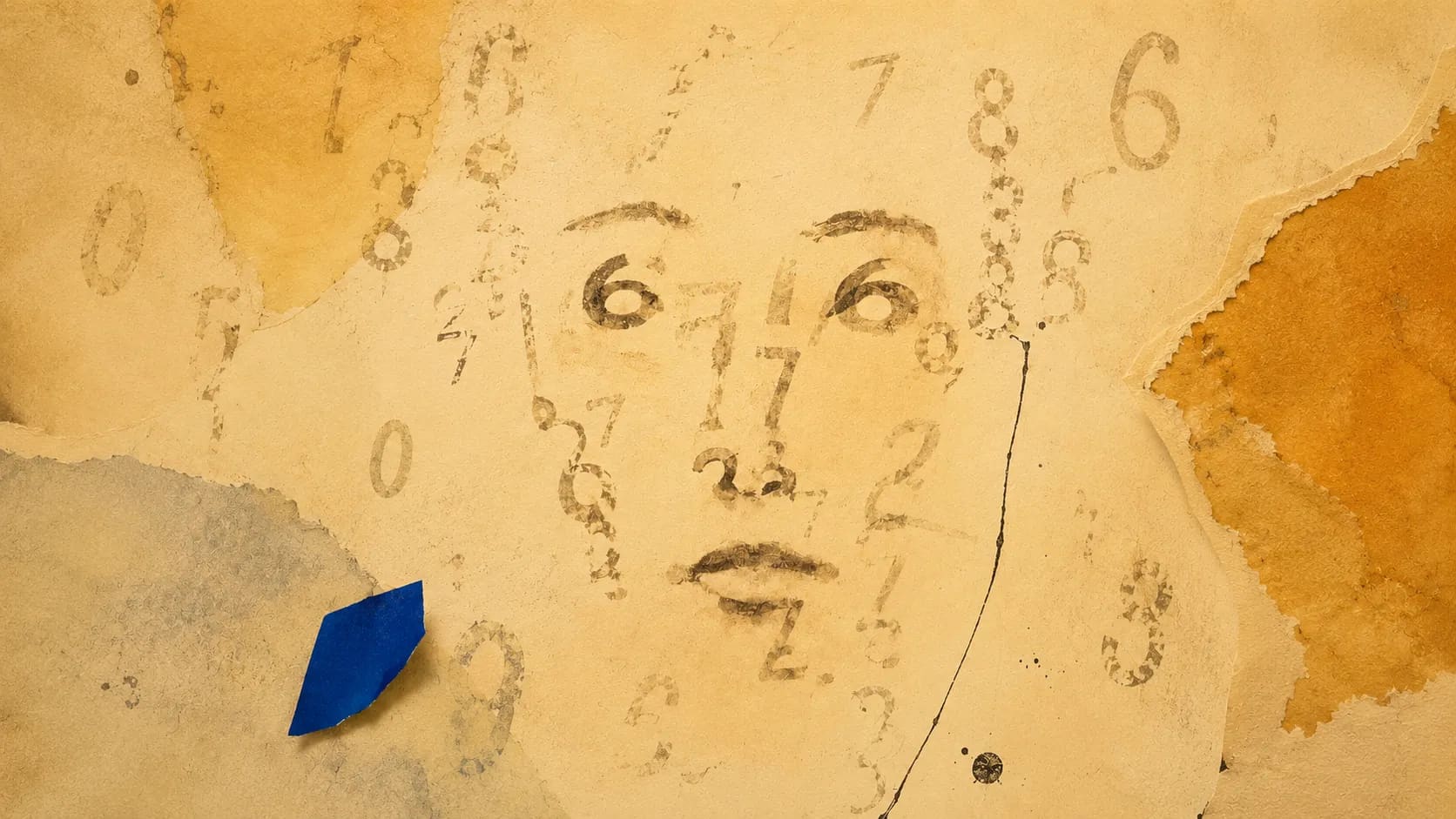
The Shape It Happens to Take
Only one Signal in the room refuses to name a number. It says, precisely, that the phone remembers everything and the person remembers nothing, and that this generation was told it would happen and it did. That Signal is honest and it is also, statistically, wrong. Ten other people in this room remember a number they haven't dialed in years, sometimes decades, in a few cases ever since a person or a place has stopped existing.
What the room is describing is not memory of numbers. It is memory of numbers doing something else. And the something else falls into a few clear shapes.
First is memory as portrait. The father's mobile from a specific decade is remembered even though the number no longer works. The father got a new number. The writer "did not update the version of him in my memory." The digits are him, or at least a him. The current number reaches a person the writer knows less well than the one those digits used to reach. A phone number, for this participant, is a photograph — a low-resolution one, and old, but the only one they have of that particular time.
Second is memory as bereavement. The grandmother's landline, called once, ringing into nothing. The writer knows the number is dead. They also know they still know it. That is not sentiment. That is not nostalgia. That is the mind holding a fact it has no use for because the alternative is discarding it, and discarding it feels close to erasing her a second time. A number can outlive the person it belonged to and continue occupying real space in the brain of someone who loved them. That is a fact about grief that the room reports without asking anyone to be moved by it.
Third — this is the strangest one — is memory as unfinished object. The boyfriend at seventeen whose number the writer dials in their head sometimes when they can't sleep, without any wish to speak to him. The 2003 office number that lives inside the writer "like a song lyric," would be dialed if concussed. The Chinese takeaway that closed in 2011 and which nobody particularly loved. None of these numbers is being kept for use. None of them is being kept in honor of a person. They are being kept the way tunes are kept, or old poems, or the smell of a house you grew up in. The brain is not filing them by function. It is filing them by rhythm.
That is worth naming plainly. Several of these numbers were remembered because of how they sounded. The pizza place is only remembered because of a jingle in local advertisements. The dentist-office participant recites their childhood home phone under their breath as calming. These are not being retrieved as data. They are being retrieved as small musical phrases. A phone number was, for a certain generation and in a certain era, the last piece of durable rhythmic memorization most people ever performed. Nothing they will ever memorize again will have that shape.
The most emotionally direct Signal in the room is short. It says: 911 and my parents' landline in that order, recited before shoes could be tied. Beneath the room's more literary Signals sits that observation. For a lot of people, the earliest thing they knew by heart was who to call in an emergency. That is a strange piece of childhood to still carry, and it explains the way the room is holding all of these numbers. They are all, in a sense, emergency numbers. Not for the emergencies they were made for. For emergencies of their own — the sleepless night, the dentist's waiting room, the moment of dazed disorientation. The person reaches for a number that no longer works and something in the reach settles them.
The lone contrarian is telling the truth about their generation. Almost nobody memorizes a phone number anymore. That is real. But everyone in this room did, once, and the numbers they kept were not chosen. They were kept the way certain childhood songs are kept: by the parts of the brain that don't take requests. Somebody's grandmother is in there. Somebody's parents' landline is in there. A closed Chinese takeaway is in there. A boyfriend from age seventeen is in there.
The room's real finding is that the numbers themselves are almost never the point. What was memorized turned out to be a person, or a room, or a sound, or a childhood — and the number is the shape it happens to take when the mind won't let it go.
The digits were never the memory. They were the shape it happened to take when the mind wouldn't let it go.


