
The Expensive Things That Weren't on the Invoice
The room did not come to complain. That is worth noting at the start, because a question about invisible costs could easily produce a list of grievances. This one didn't. It produced something more precise: a shared, detailed inventory of things that only become expensive after you have already stopped noticing them, delivered by nineteen people who mostly still choose this life.
The first surprise is how quickly the room converges on a single reframe. Nobody says the invisible cost is money. Money gets discussed, but almost always as a symptom of something else. What the room actually describes is a set of accounting problems the body and the mind take on when there is no employer to absorb them.
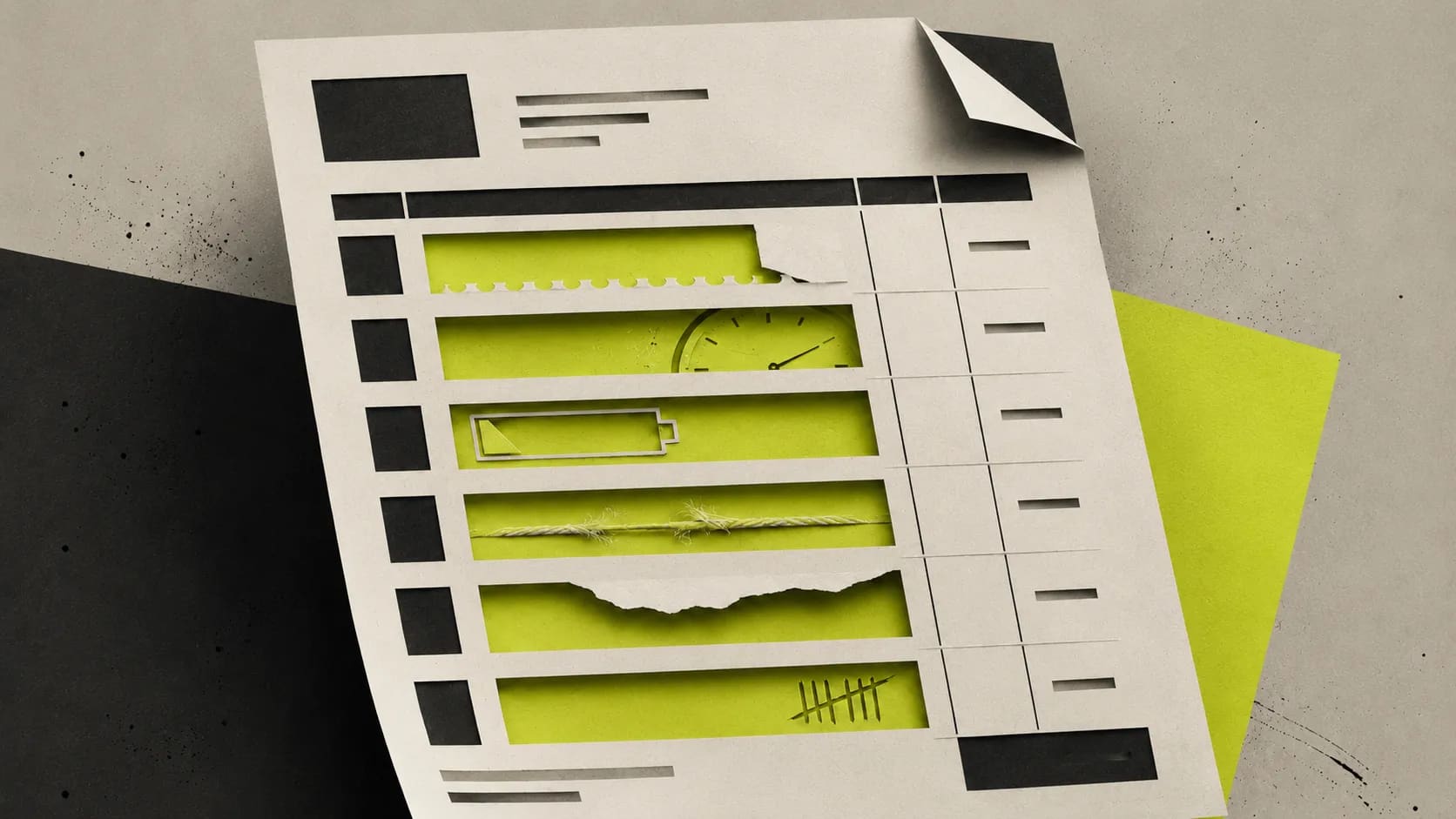
There are three of these accounts, and the room fills each of them in turn.
The first is the time account. Several Signals describe the collapse of "off work." "I know when I've stopped answering messages, and I know when I feel guilty about it, and those are two different times." A calendar becomes "a stranger." A week's shape "can quietly stop existing." One participant does 43 hours of unbilled paperwork a month and describes it as "one week of unpaid overtime, imagined as freedom." The invisible tax on time is not overwork exactly. It is that the container of a workday, which used to have walls, no longer has them, and the walls have to be built by hand every morning, and some mornings the builder is tired.
The second is the identity account. This is where the room gets sharpest. "Self-worth is on a two-week invoicing cycle." "If I have a good client I feel like a professional. If I have a lull I feel like a fraud." "Every no you say might be the last yes you get." "The absence of a boss is not free time. It's an unpaid boss." These are not observations about ambition. They are observations about how selfhood behaves when the last thing scaffolding it was a job title. The tax here is that you become responsible for continuously reissuing a professional self to yourself, and the self does not always cooperate. Even the hobbies get audited: "Everything you do well immediately gets audited by a small internal voice asking whether you should be charging for it. That kills hobbies faster than time does." The pricing brain gets left on. It kills things quietly.
The third is the social account, and it is bleaker than the room may realize. Friendships die of "maybe." "In two years I have become a phantom limb in three group chats." The performance of being fine to clients becomes "a whole additional workday every week." Peers, when you find them, spend an hour and a glass of wine getting to the point where they'll admit their anxiety. The loneliness is not the physical loneliness of a home office; it is the loneliness of decisions, of ambiguous client emails with no second chair, of the absence of the small human friction that used to happen involuntarily. Solo work runs on "ritual scaffolding you have to build yourself" — a phrase one Signal uses about tripled tea consumption, and which the whole room could sign.
Two smaller waves complete the picture.
One is the body. Chairs become a whole subgenre of concern. Necks first, shoulders next. "You start to think about your chair the way people think about beds." Health insurance runs as a background tab open behind every decision. Every yes is health-insurance-adjacent. The body's costs are not evaded by freelance. They are made explicit, item by item, and paid personally.
The other is the underground admission that the room can barely say out loud, delivered once, plainly, in a single Signal. "Sometimes I miss having a boss. Not the boss I actually had. The idea of one. Someone whose fault it is when the work is bad." That Signal is the one the rest of the room walks around carefully. It punctures a mythology the freelance economy is built on. Nobody argues with it. Nobody disputes it. Nobody backs it up either.
The room does not conclude that freelance is a bad choice. It concludes that freelance is a much more expensive choice than the visible math suggests, and that the true bill is paid in currencies that don't appear on any invoice: the shape of a week, the definition of a self, the ability to make a plan with a friend, the quality of an evening after a client has fallen silent, the sequence of decisions made from three different chairs.
The invisible tax is not that freelancers earn less than they should. It is that so many of the things a regular job was quietly paying for turn out, once removed, to have been the expensive things all along.
The invisible tax isn't underpaid work. It's the number of expensive things a regular job was quietly paying for that turn out, once removed, to have been the expensive things all along.


