
Official reveal
Short Preview Summary
Almost everyone who'd actually seen the numbers described real consequences — a resignation, a resentment, a friendship changed — while the room's clearest insight was that the silence itself might be doing exactly what it's designed to do.
Main Signal Waves
[{"read": "Aggressive enforcement of pay secrecy read, to several participants, as evidence the silence is protecting someone specific.", "title": "Silence as policy, not accident"}, {"read": "The two clearest cases of discovered pay gaps produced immediate, concrete action — not just discomfort.", "title": "The number that changes everything"}, {"read": "Leaked or volunteered numbers left lasting damage even when the information itself was accurate.", "title": "Knowing at a cost"}, {"read": "A considered, non-naive preference to preserve peace and relationships by declining the number.", "title": "Willful not-knowing as self-protection"}]
Full Official Reveal
Fifteen people, one blunt question, and a room that split almost evenly between those protecting themselves by not knowing and those who'd already paid a price for knowing. Very few signals landed anywhere neutral in between.
The most consequential answer in the room came with a timestamp attached: “Found out I'm underpaid by almost 20%. Gave notice two weeks later. Direct cause and effect.” Twenty percent, discovered directly, followed by a resignation two weeks later, described not as a dramatic decision but as a simple, almost mechanical cause and effect. A second signal reported a related but quieter version of the same discovery: “I found out I make less than someone I trained. I have not been the same at work since,” framing it less as a single event and more as an ongoing condition, something the participant is still living inside of rather than something that's already resolved. Between these two signals sits the room's clearest argument for transparency: information changed behavior, immediately and measurably, in a way vague suspicion never had.
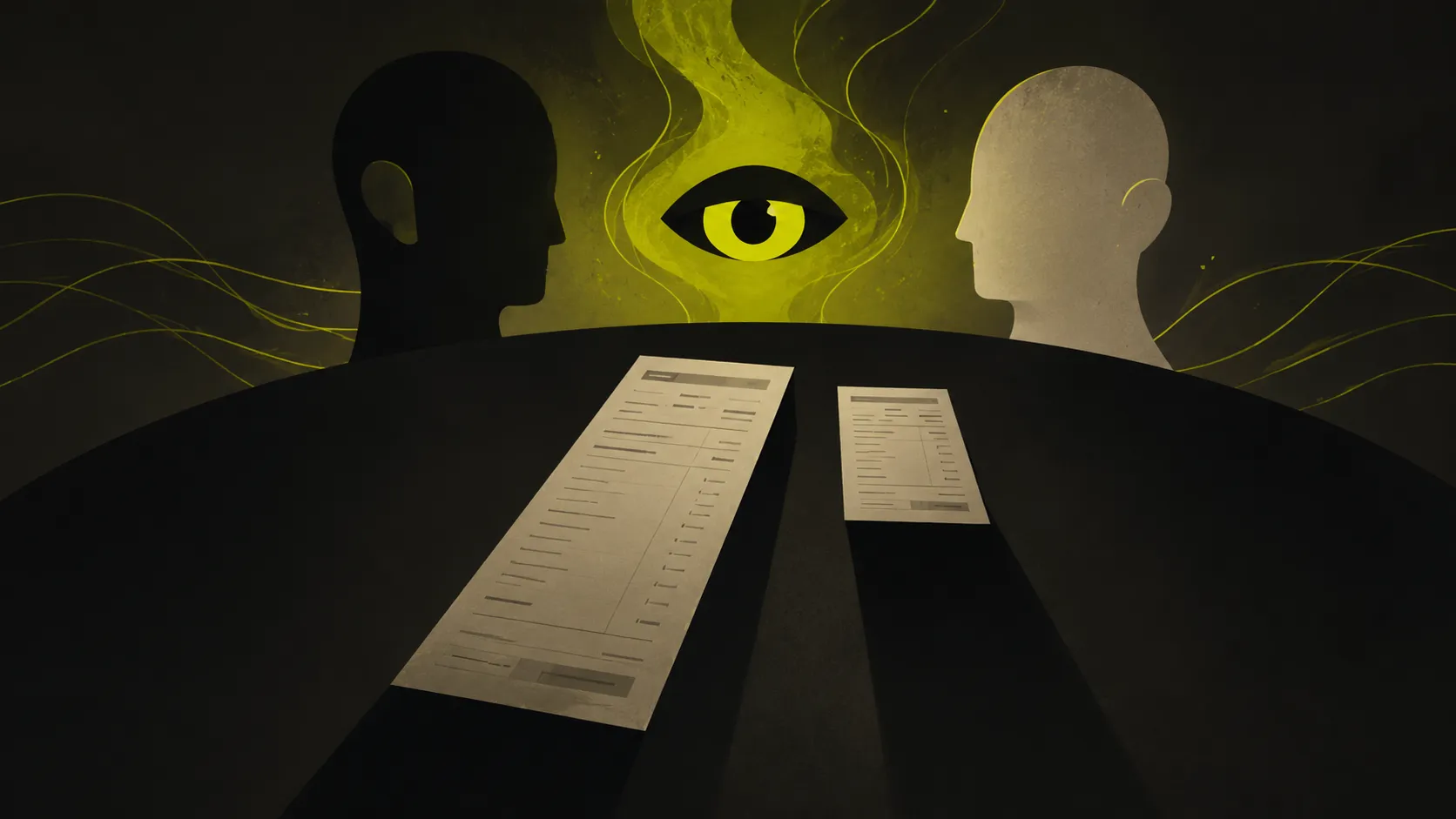
Against that, several signals argued, some directly, some structurally, that the silence around salary isn't an oversight, it's engineered. One participant put this as sharply as anyone in the room: “No. My company treats it like a firing offense to even discuss it, which tells you everything,” pointing out that a policy this aggressively enforced isn't neutral, it's protective of something. A second signal extended the logic a step further, reframing curiosity itself as something the culture has trained people to feel guilty about: “Wanting to know feels petty until you realize the not-knowing is the thing actually designed to benefit someone else.” Read together, these two signals argue that not-knowing isn't a natural state that transparency would disrupt, it's already the disruption, quietly benefiting whoever set the terms.
A third wave complicated the transparency argument by showing that knowing isn't automatically better, just differently costly. One signal described the aftermath of an accidental leak with something close to lingering damage: someone leaked a spreadsheet three years ago and I've never recovered from what I learned, years later, still processing information that arrived without consent or context. A related signal described a manager volunteering their own number unprompted, and regretting having received it: I wish they hadn't. A third, quieter signal named the specific fear operating just underneath many of these responses, not fear of a number itself, but fear that the number would confirm something already suspected, making a private worry undeniable rather than debatable.
Sitting apart from both camps was a smaller, structurally different group: people who already know everyone's number, professionally, and have chosen total silence anyway. One signal was direct about this: “I know because I'm the one who processes payroll. I have never told a single person and never will,” processing payroll and holding every figure without ever disclosing a single one, framed not as loyalty to policy but as a personal, deliberate choice. This signal complicates the room's implicit binary; silence isn't only imposed from above, here it's actively maintained by someone who has every technical ability to break it and chooses not to, for reasons the signal doesn't fully explain.
The remaining cluster defended not-knowing as a genuine preference rather than a policy compliance. One signal called it its own kind of peace the participant isn't ready to give up. Another, more specifically, connected the not-knowing directly to protecting relationships with coworkers, worried that a number might introduce resentment into friendships that currently work fine without one. A third simply admitted the number would probably ruin a contentment that currently feels real and doesn't want to risk it. These signals don't read as naive. They read as a considered trade, deciding that some kinds of clarity aren't worth what they'd cost.
A smaller, practical wave sat between the extremes: signals that framed the whole question around usefulness rather than comfort. One participant said plainly that they'd want to know only if it enabled something concrete, like negotiation, otherwise, in their words, it's just a number that ruins lunch. Another described the guessing itself, rather than any specific number, as the actual source of discomfort, arguing that almost any real answer would be less corrosive than ongoing speculation. A rarer, more optimistic signal broke from the room's overall tone entirely, describing a team where compensation is openly discussed and reporting that it had made raises make actual sense for once, the only signal in the room to describe transparency producing something closer to relief than damage.
What the room adds up to isn't a clean argument for either secrecy or transparency. It's a demonstration that both positions carry real, specific costs, and that almost nobody in this room was operating on principle alone, they were operating on direct, remembered experience, good or bad, of what happened the last time a number became known, or stayed hidden. The strongest thread running underneath all fifteen signals wasn't about money at all. It was about who gets to decide when comfortable ignorance stops being a personal choice and starts being a policy quietly working exactly as designed.