
Official reveal
Short Preview Summary
Almost nobody in this room dressed for the occasion. They dressed to bring someone, or someone they used to be, along with them.
Main Signal Waves
[{"read": "Heirloom items were worn less as accessories than as a way of including an absent person in the day, on purpose, one specific occasion at a time.", "title": "Dressing To Bring Someone Along"}, {"read": "Several outfits were kept in reserve specifically to summon an earlier, braver, or more successful version of the wearer for a hard day.", "title": "Dressing To Borrow A Former Self"}, {"read": "At least one outfit acquired its association through repetition rather than intention — proof that garments can become a forecast without anyone deciding they should.", "title": "The Meaning That Wasn't Chosen"}]
Full Official Reveal
Ask what a saved outfit means and you'd expect answers about formality — the good suit, the nice dress, the thing you wear when the day demands it. Instead, this room described something closer to a delivery system: clothing used specifically to bring another person, or an earlier version of yourself, into a room they otherwise couldn't attend.
The most literal version of this is stated almost matter-of-factly. A participant pins their grandmother's brooch to whatever they're wearing, and describes the decision in exactly those terms — the occasion "deserved her in the room too." Another wears a father's old watch that no longer keeps accurate time, specifically to events "he would have wanted to hear about." A third wears her mother's scarf only on her mother's birthday, "even though she's been gone for years now." None of these are outfits chosen for how they look. They're chosen for who they're able to smuggle into a room that would otherwise be missing someone.
A second, related wave does the same thing across time rather than across people — bringing an earlier version of the wearer along, rather than someone else. A participant wears the suit from their own job interview specifically to events that make them nervous now, and admits, almost in passing, that this "says something I haven't unpacked" — the outfit functioning less as clothing and more as a talisman borrowed from a version of themselves who successfully got through something hard. Another keeps a red shirt in reserve for days requiring "a slightly different, braver version" of who they usually are. A third wears the dress from the night they got engaged exactly twice since, both times "to remind myself of who I was that night." In each case, the occasion isn't really being dressed for. A former self is being borrowed for the occasion instead.
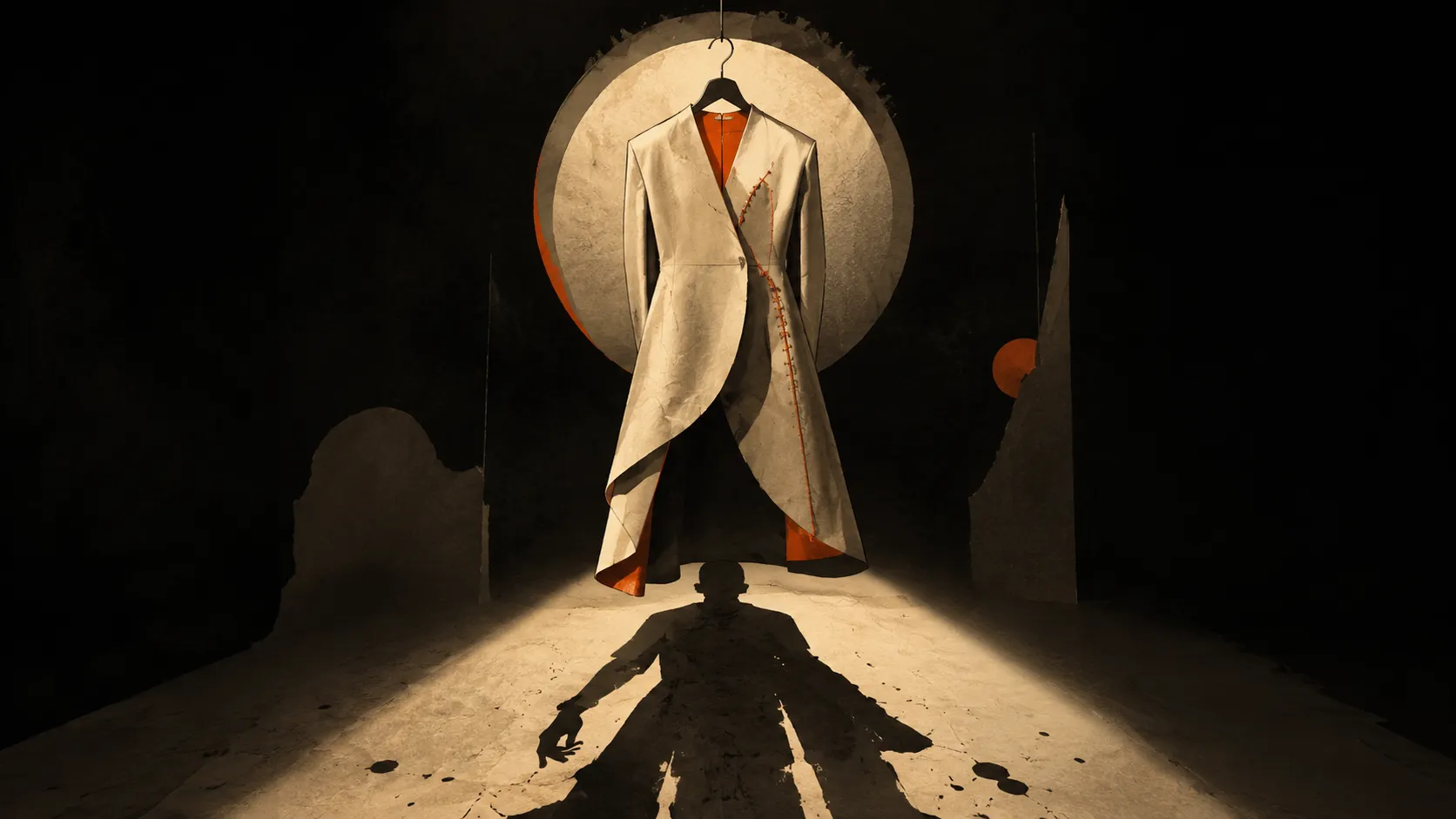
The room's most striking signal belongs to neither wave cleanly, and it's the one that reframes everything else. One participant describes a green blazer that has become, "against my will," the outfit worn to three funerals and a layoff — a garment that acquired a meaning nobody chose for it, simply by being present at enough bad news in a row. Unlike the brooch or the scarf, this outfit wasn't selected for its symbolism. The symbolism accumulated on its own, through repetition, until the blazer itself became a kind of forecast: if it's out of the closet, something has gone wrong.
Even the room's plainest signal — clean sneakers, saved specifically for first meetings, worn to feel "one step more put together" — belongs to the same family once you notice the shape of it. It's a smaller, lower-stakes version of borrowing confidence from an object rather than generating it from scratch. Nobody in this room, dressed up or dressed plainly, described simply meeting a dress code. Every single one of them described outsourcing some part of the occasion's emotional weight to a piece of fabric that had already proven, once, that it could carry it.
What ties an heirloom brooch to a pair of sneakers is the same mechanism, scaled differently: clothing here isn't decoration. It's evidence, kept on hand, that the wearer — or someone they loved, or someone they used to be — has already survived whatever the day is about to ask of them.