
Official reveal
Short Preview Summary
Eighteen precise domestic messaging systems, embedded in dinner.
Main Signal Waves
[{"read": "In half of the Signals the food is being said instead of 'I am sorry.' The words are unavailable to the household. A generation, or several generations, has agreed that the sentence itself is more painful than the arrangement, and has built a small precise vocabulary of dishes that says the sentence for them. The rice pudding participant is the clearest: her mother's diabetes is not a coincidence. The apology has a physical cost. That cost is the apology.", "title": "The meal is the sentence"}, {"read": "Dumplings that take hours. Chicken by a father who never cooks. Picnic on a Tuesday. Pancakes on a school day. A takeaway curry ordered from the same specific place for forty years. In these households the food is not selected for its meaning. The meaning is measured by disruption to the household's usual patterns. Time and inconvenience are the units of apology.", "title": "The message is the labor"}, {"read": "'My mother argued with hers. My grandmother made the stew. My mother ate it. That is my inheritance.' The kısır with extra nar ekşisi the aunt has never explained. The mashed-potato participant is 42; her mother still makes it when she visits and looks tired. The recipe is now a diagnosis. The vocabulary is being taught, silently, and none of the teaching is verbal.", "title": "The protocol travels through generations without translation"}, {"read": "'My family holds grudges through food, not away from it. Silence over lasagna. It has done nobody any favors.' Not a control group. A warning. The alternative to a small precise food-based forgiveness system is not a healthier household. It is often a household in which forgiveness never gets said at all.", "title": "The warning from the one household without the vocabulary"}]
Full Official Reveal
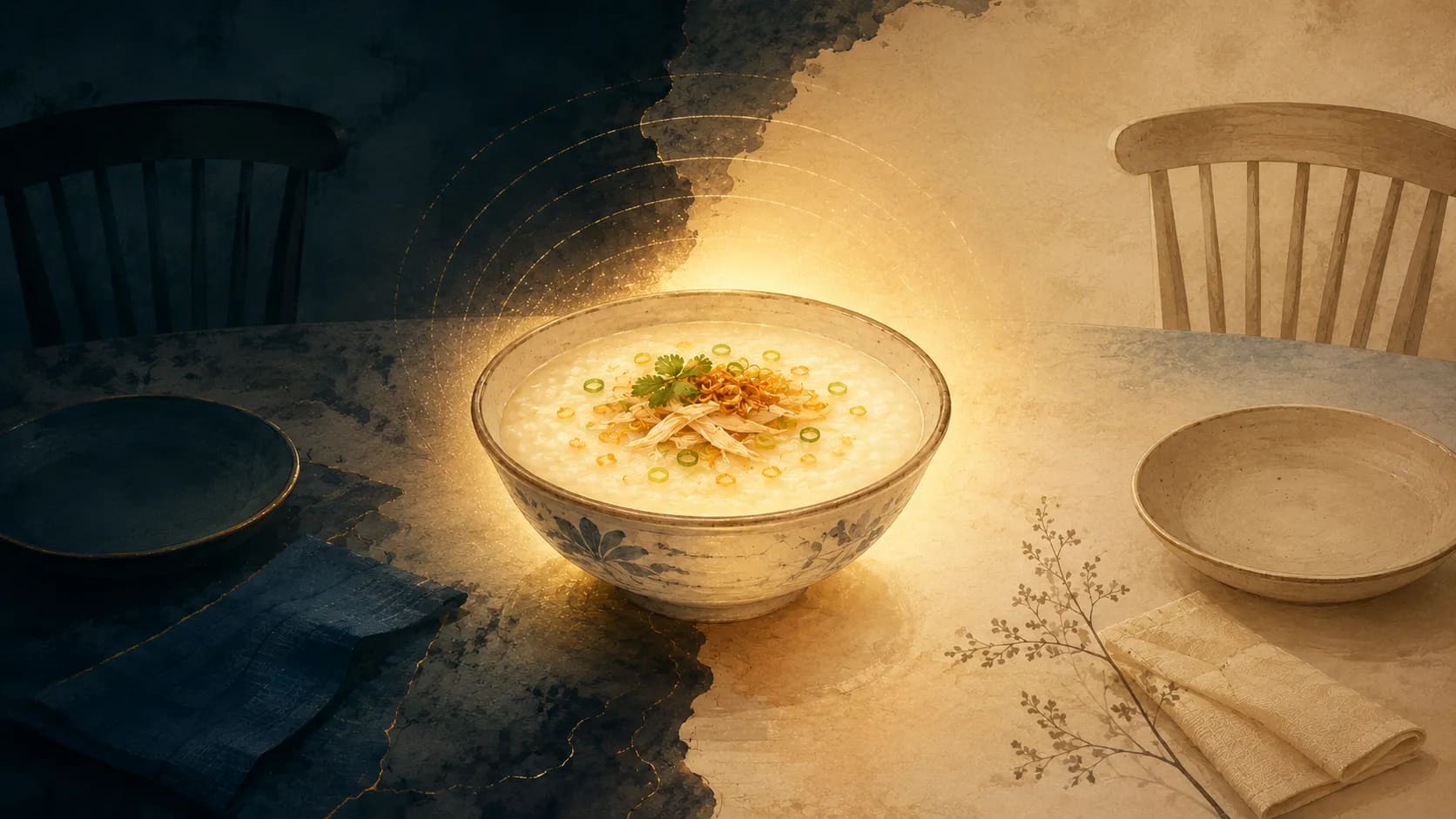
Eighteen Signals arrived, and almost none of them are really about food. The food is precise, sometimes specific to a single pot or a specific bakery on a specific corner. But the participants are describing a protocol. A domestic messaging system, embedded in dinner, developed by a household to say the one word that household could not say out loud.
The protocols are strikingly specific. Karnıyarık after an argument, and the sorry is not the eggplant, it is the sound of the knife on the board. A father's roast chicken made only when the week has been repaired, and the mother's half of the truce is not commenting on the seasoning. A mother's tea placed and abandoned: if you drink it she comes back, if you don't she doesn't. Dumplings that take hours to fold: the apology is the labor. Rice pudding made by a diabetic mother who is not allowed the sugar: the forgiveness has calories she isn't allowed to have; that's the point.
Four shapes are doing the interpretive work.
The first is the meal as substitute for the sentence. In half of the Signals the food is what is being said instead of "I am sorry." The words are not withheld to punish. The words are unavailable to the household. A generation, or several generations, has agreed that the sentence itself is more painful than the arrangement, and has built a small precise vocabulary of dishes that says the sentence for them. The rice pudding participant is the clearest voice on this. The mother's diabetes is not a coincidence. Her body cannot take the food, and she is offering it to her child anyway. The apology has a physical cost. That cost is the apology.
The second is the meal as labor. This is the dumplings Signal. It is also the omelette-made-thicker-than-usual. The chicken with lemon by a father who never cooks otherwise. The picnic-on-a-Tuesday. The pancakes on a school day. In these households the food is not selected for its meaning. The meaning is selected by the effort. A pan appearing where a pan does not usually appear, a dish taking an hour more than it ordinarily takes, a takeaway curry ordered from the same specific place for forty years — the message is the disruption to the household's usual patterns, and the disruption is measured in time and inconvenience.
The third is the meal as protocol between generations. This is where the room gets quietly serious. "My mother argued with hers. My grandmother made the stew. My mother ate it. That is my inheritance." The kısır with extra nar ekşisi. The aunt has never said what the extra is for. The 34-year-old participant tastes it every time. These Signals name a fact the room does not otherwise say out loud: this vocabulary is being taught, silently, from one generation to the next, and none of the teaching is verbal. The children learn the code by receiving food, then, eventually, by preparing food, and eventually the code is passed down without anyone having said what the code means. The A-levels-and-mashed-potato participant is 42. Her mother still makes it. The child does not need to fail anything. Looking tired is enough. The recipe is now a diagnosis.
The fourth shape is the meal that isn't food. The tea placed and left. The pastry on the kitchen table nobody asks about. The takeaway curry. In these Signals the pattern is even sharper: the meal has been abstracted almost to a symbol. The pastry does not really matter. Who takes one does not really matter. The gesture is the apology. Consumption is optional. That is a further step in the same evolution.
The one Signal that refuses the premise is worth naming. "My family holds grudges through food, not away from it. Meals in our house continue during arguments. That is our tradition. Silence over lasagna. It has done nobody any favors." That Signal is not a control group. It is a warning. Not every family has this vocabulary. Some households have decided that meals will continue regardless, and the participant is naming, without prompting, that this decision has done nobody any favors. Read against the other seventeen, that Signal implies the alternative to a small precise food-based forgiveness system is not a healthier household. It is often a household in which forgiveness never gets said at all.
The room's real finding is that in many households the meal is not a warmup to the apology, it is not a substitute for it, it is not a symbolic version of it. It is the apology. Consumed, tasted, refused, or accepted, the meal is the sentence, and the sentence exists nowhere else. That is a strange and specific thing about domestic life that is difficult to describe outside it. Eighteen Signals just described it precisely.