
Official reveal
Short Preview Summary
Fifteen covers that made the original impossible to hear the same way again.
Main Signal Waves
[{"read": "Cash's Hurt as evidence. Buckley's Hallelujah as a wound where Cohen wrote a hymn. Chet Baker turning a show tune into a specific addict's letter. Israel Kamakawiwo'ole making hope into hope that has already been broken. In each case the participant is not calling the cover a better song. They are calling it a piece of proof the original didn't have. Once heard, the original starts to sound like a first draft.", "title": "The cover as proof the original didn't need"}, {"read": "Aretha rewriting Otis's plea into a demand. Big Mama Thornton writing Hound Dog and getting a footnote. Nina Simone turning a novelty into violence. In these Signals the cover is a political act. The discomfort in preferring it is the discomfort of realizing the culture had allowed the original to mean less than it should have.", "title": "The cover as correction"}, {"read": "The Ryan Adams / Taylor Swift Signal names what the rest of the room circles. A male artist covering a young woman's pop record and being credited for its depth is a different transaction than a Black woman recovering her own genre. The room contains both moves and treats them differently.", "title": "The direction of the cover matters"}, {"read": "Whitney vs Dolly. Fugees vs Flack. The Alien Ant Farm confession. Several participants carry two versions of many songs and know that the version they intellectually prefer is not always the version they emotionally choose. The betrayal is that the 3am version is not always the one they would defend at a dinner party.", "title": "Two versions of the same song, one for daylight and one for 3am"}]
Full Official Reveal
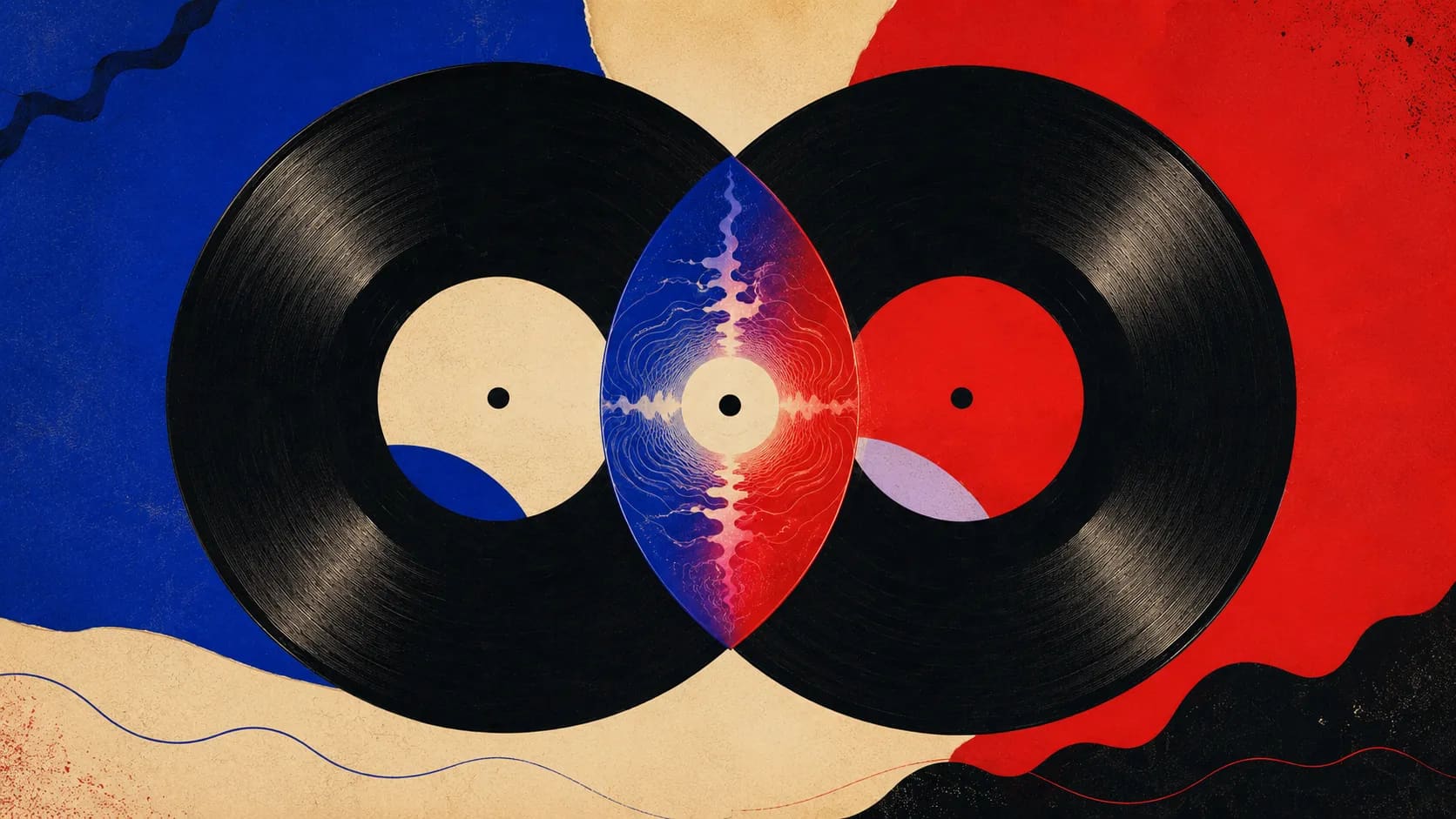
The room is not really about cover versions. The room is about the strange and specific guilt that comes from preferring the second version of anything — a person's second reading of a poem, a translation, a photograph of a place, a memory of a night, a cover of a song. The song is just where the guilt is most legible.
Fifteen Signals arrived. Nearly all of them describe the preferred cover in some version of the same shape: the original imagined the thing, and the cover had lived it. That phrase belongs to the Johnny Cash Signal — "the original imagined the pain. The cover had lived it" — and it names what most of the room is circling.
Buckley's Hallelujah is a wound where Cohen wrote a hymn. Nina made a novelty into violence. Sinead made a Prince song into her face. Chet Baker made a Rodgers and Hart show tune into a specific addict's letter. Israel Kamakawiwo'ole made hope into hope that has already been broken and is still hope. In every case, the participant is not saying the cover is a better piece of music. They are saying the cover contains a proof the original didn't need to. And that proof, once heard, cannot be unheard. The original starts to sound like a first draft of the cover.
That is where the betrayal lives. Not against the songwriter. Against the reader's own ear. Every one of these Signals is quietly admitting to the same thing: after hearing the cover, they can no longer honestly listen to the original the way the original was meant to be listened to. Their ear has been recruited into a second version. That is the loss the room is naming.
Three sharper movements happen inside this main shape.
The first is the political movement. Aretha's Respect, made "a demand from a woman" out of Otis's "plea from a man": "that is not a cover. That is a rewriting. The betrayal was necessary." Big Mama Thornton wrote Hound Dog and got a footnote while Elvis got the world: "the betrayal is not to the song. The betrayal is what we let happen to who wrote it and who sang it first." Nina Simone taking Screamin' Jay Hawkins's novelty and making it violence — "the betrayal is not to the song. It's to what we let the song be for 30 years." In these Signals, the cover is not just a preferred version. The cover is a correction to something the culture had gotten wrong. The reveal here is that a certain kind of cover version is a small political act, and the discomfort in preferring it is the discomfort of realizing the original was allowed to mean less than it should have.
The second is the gender-and-authorship movement, and it belongs mostly to the Ryan Adams / Taylor Swift Signal. "Some people said he had improved them. Some people said he had explained them to men. Both were true." That Signal is doing something the others are not. It is naming that the direction of the cover matters. When Aretha covers Otis or Nina covers Screamin' Jay, the direction of the cover feels like recovery. When a male artist covers a young woman's pop record and is credited for its emotional depth, the direction feels like theft with better reviews. The room includes both moves and treats them differently, correctly.
The third is more personal. The Alien Ant Farm Smooth Criminal Signal is the room's honest embarrassment. "My taste is a receipt for what year I was 12." The Whitney vs Dolly Signal is a subtler version: "I side with Dolly at 3am and Whitney in daylight." The Fugees vs Roberta Flack Signal is a similar one: preferring the small perfect object, singing along to the large perfect object. These Signals name what several others hint at — that most people carry two versions of many songs, and that the version they intellectually prefer is not always the version they emotionally choose. The betrayal is that the preferred version at 3am is not always the one they would defend at a dinner party.
The one Signal in the room that refuses the premise — "every cover I have loved I have loved less on the third listen. The original always wins in the long run" — is not being contradictory. It is being the room's control group. Its presence sharpens what the other fourteen are saying. Most participants are describing a specific sub-category of cover: the one that will not lose to the original on the third listen. Those covers are rarer than we pretend. The room mostly loves the same ten. Those ten are the ones that survived the third listen and became second originals.
The room's real finding is that the preferred cover is almost always the version that added what the original could not have known, or corrected what the original should not have said, or was witnessed at 3am by a listener who is not always ready to defend what witnessed them. The betrayal is not a betrayal of the songwriter. It is a betrayal of the listener's own agreed-upon taste. That is a smaller and stranger kind of betrayal, and this room, for fifteen different reasons, is unable to stop committing it.